Showing posts with label author interview. Show all posts

Friday, November 13, 2015

Children's Book Review: Paper Moon, Written by RM Hedgcoth, Illustrated by Tony Tibbits


Storyline: 5.0 Stars
Illustrations: 5.0 Stars

Cover: 5.0 
Total: 5.0 Stars
Book Review: Paper Moon presents the phases of the moon in successful rhyme (which is difficult to do!), with a parable about a moon who slowly tires and then wakes.

Storyline: Moon falls asleep to the lullaby of the Milky Way, and we see him wax and wane according to his sleepiness. Fun parable to introduce the concepts of the phases of the moon. Simple text suitable for young children, such lush illustrations that all ages will enjoy this book. 5 stars

Illustrations: Wow! These illustrations are gorgeous. Full of color, with a little mystery and adding so much to the simple story. 5 stars

Total: An enthusiastic 5 stars


*****************************

Rachel Hedgcoth and Tony Tibbits are actually brother and sister! They agreed to an interview, see below.

AUTHOR: RACHAEL HEDGCOTH, Midlothian, TX


VH: How did you come up with this book idea?
RH: I actually wrote Paper Moon years ago for a bedtime story contest. In hindsight, it is fortunate I did not win (or even place!) in the contest because eventually my brother and I joined forces to create this eBook ourselves! This book is a gift I will always treasure, and I am so grateful to my brother for adding such visual dimension to my little story.


VH: Is astronomy an interest of yours?
RH: I have always been fascinated by the moon. I love the sea, weather and animals. I am part Native American, and sometimes I wonder if that is why I am inspired by the natural world on so many levels.


VH: If you were a planet, which would you be?
RH: Actually, I would not be a planet. I would have to be the moon … because I am continually mesmerized by its ever-changing hypnotic charm.


VH: What are three favorite children's books?
RH: It is crazy impossible for me to choose only three, but I love Arnold Lobel’s “Frog and Toad” books, Maurice Sendak’s classic tales and anything by Mo Willems.


VH: What are three favorite books?
RH: I love anything by Stephen King. But at the other end of that spectrum, I am a forever fan of Judy Blume and Beverly Cleary.

  
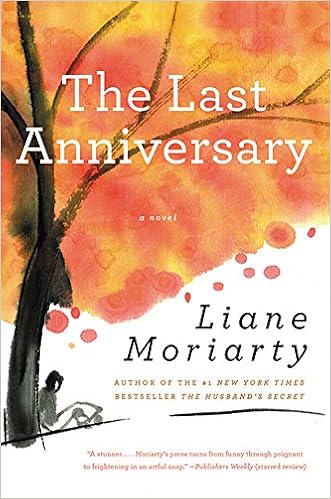
Currently, I am reading a book by Liane Moriarty. My love of the written word spans a diverse range. I pretty much am addicted to books of all breeds. 


VH: Who is an author that has influenced you?
RH: I draw inspiration from children’s writers of yesterday and today. I love the silliness and simplicity of Dr. Seuss, the gentle honesty of Arnold Lobel, R.L. Stine’s ability to thrill and humor simultaneously, and of course Maurice Sendak’s brilliant imagination. I strive to soak up wisdom from these and other phenomenal authors and aspire to create stories of my own that children will enjoy.

VH: What advice do you have for budding children's authors?
RH: As someone who is still navigating that journey myself, my advice is to read, read and write from the heart! You’ll feel it in your soul when you have created something special.


ILLUSTRATOR: TONY TIBBITTS, Kansas City, MO

VH: What is your medium for this book?
TT: Illustrations for this book were all created with Photoshop using brushes, filters and layering effects. Some original textures were created by scanning torn paper and layering.

VH: How did you get your colors so brilliant?
TT: Really just experimenting. I wanted the colors to evoke the mood of the words and change as the moon slowly fell asleep! Magic happens when words and images blend to create something beautiful.

VH: Who are artists who've influenced your work?
TT: I’ve been doing commercial graphic design for nearly 20 years. I’ve designed just about every printed and digital item there is! If I had to name my top influences, they would be Paul Rand, Storm Thorgerson and Stefan Sagmeister. Although my work is nothing like or even close to the level of work they have done. I admire them greatly for their ability to distill complex concepts into pure and simple communication. These designers are true artists in my eyes.


VH: How did you get started in illustration?
TT: I wouldn’t even call myself a proper illustrator. My passion is graphic design and I tend to like a bold graphic style. I try not to put too much pressure on myself in comparing my work to “real” illustrators. When the opportunity arises and I feel like it’s something I can accomplish and be proud of, I do it. I’ve really enjoyed the freedom of interpreting Rachael’s words and having complete freedom to put it together. We speak the same language.

VH: What advice do you have for budding illustrators?
TT: My advice is the commercial creative world can be a tough career. Budgets can be low, deadlines are short and you are expected to work miracles at every turn. I would recommend using your talents to create products that you can sell yourself. I’m a huge entrepreneur and love the freedom and reward of working for yourself. The less people between your vision and the customer, the better! It’s never been easier to start your own business.

VH: Who are three favorite children's book illustrators?
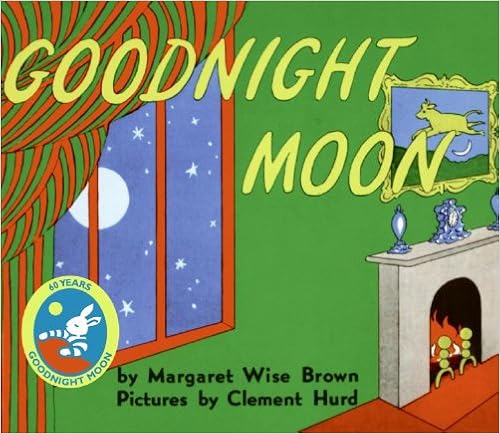
TT: I really like Mo Willems, Clement Hurd (who illustrated Goodnight Moon) and recently found Frank Viva, who has a great flat graphical illustration style and is incredibly talented.
For more information on Paper Moon and author RM Hedgcoth and illustrator Tony Tibbitts, check them out on this author page, iTunes, and Facebook.

~Valerie Harmon, Children Book Reviewer

Tuesday, August 18, 2015

Children's Author and Illustrator Interview: El Perro Con Sombrero, Written by Derek Taylor Kent, Illustrated by Jed Henry

Storyline: 5.0 Stars
Illustrations: 5.0 Stars
Cover: 5.0 
Total: 5.0 Stars
Summary: Pepe is a lonely dog whose life changes drastically when a sombrero lands on his head. But what he really wants is a family. Would he trade his sombrero wealth for a real family?

Storyline: This story is adorable and speaks to the heart. A rags to riches story, however the story ends emphasizing the importance of a loving family over the kind of life wealth alone can bring. Just what a parent wants to read to their children! Plus, it's written in both English and Spanish! 5 stars

Illustrations: The illustrations are bright and as peppy as Pepe. They add a lot to the story and are very enjoyable. Read all the way to the end for more details on Jed Henry, the talented illustrator. 5 stars

Author Interview with Derek Taylor Kent, followed by an Illustrator interview with Jed Henry:
Author Derek Taylor Kent
Illustrator Jed Henry


Author Interview:

Valerie Harmon: Why did you choose to write a bilingual book?

Derek Taylor Kent: In my travels around California promoting my middle-grade series Scary School, I found that there are many schools out there that are becoming officially dual immersion in both English and Spanish, and a huge portion of my Scary School audience were Latino kids, yet they had very little representation in the children's book market. With that in mind, I happened to be dating a Nicaraguan girl named Gabriela a few years back who also had a wonderful dog, and somehow the phrase "El Perro con Sombrero" popped into my head and it became a running joke with us. Well, we broke up, but afterward I got my own dog whose hilarious antics had me laughing all day. Inspired by my new pup, I turned the El Perro con Sombrero idea into a reality and Gabriela was kind enough to translate it into Spanish. Plus I finally had a book that I felt was very badly needed in the Spanish-speaking community so prevalent in California and elsewhere.


VH: What are three of your favorite children's books?

DTK: Among picture Books: If I Ran the Circus by Dr. Suess, Animal House by Candace Ryan,   and The Giving Tree by Shel Silverstein.
                

As for Chapter Books: The Harry Potter series, Sideways Stories from Wayside School by Louis Sachar, and Shark Wars by EJ Altbacker.
           

VH: How did you connect with your illustrator?

DTK: I didn't have to! The publisher hires the illustrator and works with their art director in creating the illustrations. Luckily, they did a fantastic job!

VH: What are three of your favorite books over all?

DTKHarry Potter and the Deathly Hallows, Ready Player One by Ernest Cline, and Breakfast of Champions by Kurt Vonnegut.


What advice do you have for people who want to write children's books?


Do tons and tons of research. Read all the reference guides on not only how to write for children but how to pitch it to agent and publishers and eventually how to market them. If possible, try to have an original concept and make it funny!

VH: How did you get published with Holt/MacMillan?

DTK: I have a great agent named Eric Myers, who discovered me back from my first middle-grade novels and got those rolling, but we had been unable to sell my first few picture books. I sent him El Perro con Sombrero and it just seemed to connect right away. There were offers from several publishers, all of whom had different ideas on how they would create and market it. Holt seemed like the best fit. I've also been a fan of everything Holt has done and my author friends have had great experiences with them, so I was thrilled to be able to work with them.

VH: What do you do to market your books?

DTK: I do a crazy amount of marketing, which seems to astonish all the other authors out there.

When my first book came out I hired a book publicist. That was VERY expensive, but I learned what they did and realized if I was willing to put in the time and effort, I could do most of what they did myself.

I contacted all the best online book bloggers, all the local bookstores, and even many of the local schools. The book blogger features and reviews got the viral side of the campaign going, but most of the sales were coming from grass roots marketing. That includes creating a show/presentation, so schools will have me do a visit and perform at an assembly.

Then I will usually do a signing afterward or go to their book fair. The bookstores like Barnes and Noble and Books Inc do many book fairs with local schools, so I get to know the Community Relations Managers (CRMs) and then they'll pitch me to schools that they work with.

Once book fair season starts up, I'll be doing two or three school visits per week all over California and sometimes I'll travel to New York and Chicago as well. I've even done shows in Minnesota when a very enthusiastic school invited me to visit and created a whole Scary School day where the teachers and students dressed up as the characters. That came from just communicating with my fans who wrote to me and responding to visit requests.

VH: What's your favorite breed of dog and why?

DTK: Of course my own dog, Zander, who's an Italian Greyhound. I think he's the perfect dog for me. He's high energy, so he keeps me active. Friendly as can be. Never barks. Doesn't shed much. Doesn't smell. Never needs grooming. And is cute as can be. I also like  , Labrodors, and I had a great Bedlington Terrier growing up. But all dogs are special in their own way.

VH: If you were a dog, what breed would it be?

DTK: Maybe a whippet, the bigger version of the Italian Greyhound. They're some of the best at winning Frisbee catching competitions and I think I'd like that.


Illustrator Interview:

Illustrator Jed Henry


Valerie Harmon: What medium did you use to illustrate El Perro Con Sombrero?

Jed Henry: This book is 100% digital watercolor. No pigments were harmed in the making of this book - but billions of electrons were sacrificed.

VH: How did you become an illustrator?

JH: I studied animation in college, and after graduating, decided to do books instead. I put together a portfolio, found an agent, and the rest is history.

VH: Who are three of your favorite artists?

JH: Tsukioka Yoshitoshi, John Singer Sargent, and Takeuchi Seiho.
Tsukioka Yoshitoshi
John Singer Sargent

Takeuchi Seiho

VH: What is your preferred medium?

JH: Watercolor or Photoshop, or a combination of the two.

VH: What advice do you have for people who want to illustrate children's books?

JH: Don't go to the library for inspiration - go to the book store. Look at the New York Time's bestseller's list. That is your competition. Vanquish them.

VH: What are three of your favorite children's books?

JH: Anything by John. J. Muth. He's a delight.


VH: What are the most important art classes for an illustrator?

JH: In the end, artists need to educate themselves. Teachers can only give you 10% of your knowledge. The rest is experience, observation and practice.

To buy the full-color eBook version (softcover also available) click here for Amazon.

Go here for Derek Taylor Kent's website, here for his book website (with select book pages), here to see him on Facebook, and here to follow him on Twitter.

Go here for Jed Henry's website, here for his blog, and here to follow him on Twitter.

Thank you Derek Taylor Kent and Jed Henry.


~Valerie Harmon


Friday, June 19, 2015

Author Interview: Boe the Great by Joel Feldman


reviewed the book Boe the Great here (I rated the book 5 stars so you should definitely read the book), and now I get to interview the author and illustrator Joel Feldman too! Read for a peek into his mind and some advice he has to other authors and illustrators.

Author & Illustrator Joel Feldman
Valerie Harmon: What children's books influenced you and are your favorites?

Joel Feldman: My mother had a small collection of French comic books. Tin-Tin and Asterix were my favorite ones. The funny fact is that at the time not only was I too young to read, but I hardly knew any French. Those colorful images are so well drawn, making each comic strip and frame guide you through the story line so perfectly. Above all I remember each and every detail those books had. The rich characters, the acting gestures, clothes and outfits, background layout etc. The scenarios were very well planned, exploring different countries and cultures. I was greatly fascinated by all of those features, and they still guide me in my work today, as a writer and illustrator.

VH: How do you get your story ideas?

JF: Whether it's watching random people on the street, reading a newspaper or a book, listening or playing music - ideas keep flowing all the time. The tricky part is to choose the best ideas, and then to transform those thoughts into a detailed story or an illustration. I'll also note that my daily work involves using my imagination all the time. Luckily, I get to sail through imaginary ideas and worlds while I'm working. Boe the Great. I had many ideas in my mind, but none of them has developed into a solid one. It was only after I randomly draw a small Viking riding a horse, on a distant snowy mountain, which made me realize I would love to "stay" there. The story developed later on, but all the small details were already present in that quick sketch, making everything very easy to visualize.
I have a privilege to get inspired by an illustration - just as it happened when I realized I would love to "stay" there. The story developed later on, but all the small details were already present in that quick sketch, making everything very easy to visualize.

VH: How did you learn illustration?

JF: Since I was very young, I always loved drawing. My father had many creative ideas and challenges, which really helped me to develop my creative skills, imagination and memory. Nevertheless, I was always more of a doodler and never consider myself an "illustrator" until I started my studies at Bezalel (Academy of Art and Design, Jerusalem, Israel) at the age of 24. I studied animation for 4 years, which was indeed a great experience.

Character design, layout design, script writing, film, directing and many more. It was all there. I learned so many tools to choose from, and after I graduated, hard as it was to get myself into "real life," I had the knowledge and artistic variety to get things moving. The beauty of this work\hobby is that it is always evolving and changing. You learn new things, and your taste differs along the years. For me it's a never ending journey, and I hope to keep it that way.


VH: Having published, what advice do you have for other authors looking to publish their books?

JF: First of all, I illustrated several books for other authors, but Boe the Great is my first as a writer as well. After I published the book through Amazon, and it was quite well received, I got a huge opportunity to publish the book in hard cover, translated from English into Hebrew. With all due respect to online marketing and distribution capacity it provides, the joy and satisfaction seeing your creation on every book shelf in your home country, is just way beyond everything I hoped for.

I created Boe the Great while working other jobs. I had an idea which I thought was worth working for, and I went all the way with it. I never expected any success or fame, and always said to myself that getting paid for this would be a bonus - not a goal. In the end, having a world I created from a small idea, into an actual book - that is true success to me. Having said that, my advice would be set your expectations right. Don't criticize yourself too much, never stop dreaming, but try to get everything in the right perspective.

VH: What is your favorite part of being a children's book author?

JF: There are many reasons to be happy and proud. First of all, the personal experience. Like every art form, it is a creative process. The journey you go through is a great experience. Though it is quite tough and very long, in the end it is really satisfying. I have created something. It has a name and look. It has an idea behind it. It has rules of its own. The second thing for me is the readers. Whether it's the parents or the children, the idea that my book, my thought and creational process, is that family's time together or any other part of their lives - is just unbelievable. I take this opportunity and responsibility for those family's precious moments very seriously.

VH: As an artist, what advice do you have for creating successful book covers?

JF: eBooks and printed books covers are quite different. The digital version of Boe the Great, as presented at the kindle store, is shown in a very tiny frame among many other book covers. Naturally, my goal was to make people see the essence of the book in a quick glance, and to hopefully make them notice it and choose it over others. I choose an illustration where Boe is shown in close up, covering almost the entire composition, leaving a reasonable spot for a readable book title. Everything needs to be visually clear and right in place.

On the other hand, printed books have a more comfortable composition, in my opinion. There is more space to create a detailed illustration, which is obviously a better way to tell what's inside the book.

Moreover, your book might be placed proudly on the display window, and also might be hidden on the shelf right next to hundreds of other books. For that, my advice would be to make it noticeable by choosing the right colors and the right font. Do your homework by going to the local book store and see for yourself what catches your attention, and what will make you browse elsewhere. Simple as that.

VH: Do you have a funny or unique story about the whole author experience you'd like to share?

JF: Boe The Great is dedicated to my father, Gadi, which sadly passed away almost 3 years ago, and 6 months before the book was made. My father's spirit is in the core of everything I do. He was extremely smart and knowledgeable, a great educator who always set a good example. He always encourage me to create, and was very proud at any result I ended up with.

Creating Boe the Great was an important therapy for me trying to be as creative as I can instead of drowning into sorrow, which I defiantly felt and still feeling until this day. A good friend of mine, who read the book, told me he felt the sub-context of Boe the Great was about Departure, not necessarily of a person, but more of an end of an era, a dramatic change in life. Though I never aimed for that purpose and perhaps other people will find different ideas, it may have been subconsciously there all along. Dedicating Boe the Great to my father is like giving a gift back in return for everything he meant for me--making him proud.

VH: Do you have anything you'd like to share with the children who read your book?

JF: Of course. Like Boe's journey in the story, it is very important for us all to search for our own unique way. It is up to each individual to search for it, but it is also up to the parents to let it happen. That child you marked as failure on one subject might be a shining star in other subjects. Our world is so full of opportunities, and it gives us endless ways to become happy and successful. Remember that failure might lead to success, and we need to open our eyes to search for it and believe in ourselves and those around us.

For more information on Joel Feldman, check out these links:
Feldman's website - www.joel-feldman.com
Boe the Great Review: 
http://valerierichardsonharmon.blogspot.com/2015/01/childrens-ebook-review-boe-great-by.html


Friday, April 24, 2015

Children's Picture eBook Review and Author Interview: The Bewundering World of Bewilderbeests Written and Illustrated by Bailey Fort

Illustrations: 5.0 Stars 
Cover: 5.0 Stars
Storyline: 4.5 Stars
Total: 5.0 Stars

My Review: Meet quirky creatures and galloping rhymes and rhythms in this well-illustrated children's book.

Illustrations: Top notch illustrations. They are colorful and the animals' expressions and oddness contribute to the book. It's very unusual to have a successful illustrator who can also write a great book (and vice versa), and Bailey Fort manages it very well.

Storyline: This isn't a story-line type of book. It's like Shel Silverstein's writings--unique creatures and fun word-play poems about the "bewilderbeests."Author Interview with Bailey Fort:


Author Bailey Fort
Valerie Harmon: How did you get started in writing?
Bailey Fort: While I’d previously gained a fair bit of experience with academic writing, this was my first real foray into writing for children—though I always did enjoy a bit of wordplay. Now I’m hooked! (As you might imagine, this form of writing has proven to be considerably more fun than the academic stuff ever was…).
VH: Why did you decide to write a children's book?
BF: It actually began as an assignment in an editorial design course, but quickly evolved into something I wanted to expand upon beyond the bounds of the course. I had a great professor who was very supportive and offered tremendously helpful guidance throughout the development process—and he encouraged me to pursue it further. That being said, the work I’d done sat on a metaphorical shelf for a while, but kept calling me back. Eventually, I returned to it and added new material (and polished up the earlier work), then decided it was finally ready to be shared with the world. On the plus side, ebook technology made great advancements in the area of children’s picture books during that time period—though I still have plans to release a print edition in the near future. Even though the children’s book began as an assignment, it turned into a labour of love; I’m thankful that the assignment illuminated an area of work I hadn’t really considered previously. 
VH: What are your top three favorite children's books?
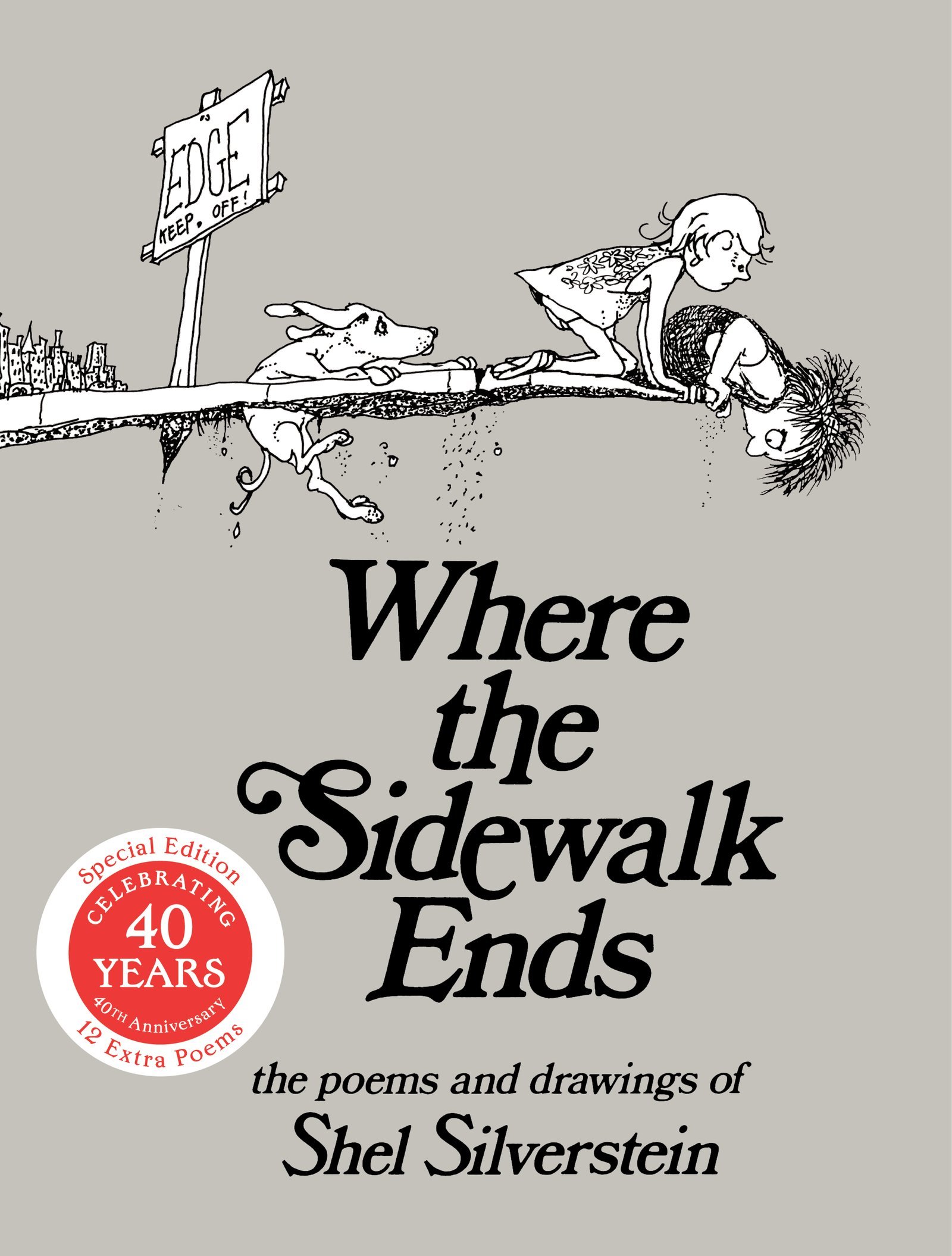
BF: Plenty of wonderful children’s books have been released since I was a kid, but some of my personal favourites were Where the Sidewalk Ends by Shel Silverstein, Matilda by Roald Dahl, and a beautifully illustrated book called Cats’ Carnival Ball written by Edith Schreiber-Wicke, illustrated by Monika Laimgruber, and translated from German by Alison Coughtry.


VH: How did you come up with the "bewilderbeest" idea?
BF: When I was developing the idea for the book, I wanted to integrate certain elements inspired by the types of books I loved most as a kid. I was drawn to anything to do with animals— especially if they were engaging characters. Rich and colourful illustrations won me over, and—perhaps most importantly— I was drawn to books that were fun to read because of their rhythm or amusing content.
I considered writing about real animals or mythological creatures, but ultimately decided I’d have the most fun introducing readers to new, made-up beasties. I wanted them each to have distinctive personalities that were like little slices of humanity, reflecting the idiosyncrasies of different people you might meet or already know personally. The creature names and poems evolved from there.
VH: Who influences your writing?
BF: Shel Silverstein was a big influence—I aimed to capture a similar sense of rhythm and playful whimsy in telling each creature’s story, but I also wanted to ensure that my own writing voice was clearly expressed. Beyond that, anything I might read (or hear) has the potential to spark an idea for word choice or a particular turn of phrase.
VH: Click here for more information on writer/illustrator Shel Silverstein.

VH: What's your top three favourite books?
BF: The Hitchhiker’s Guide to the Galaxy series by Douglas Adams,  The Amazing Adventures of Kavalier & Clay by Michael Chabon, and Papillon by Henri Charrière.


VH: What advice do you have for people who want to write/illustrate books?
BF: It involves more work than you probably realize to develop a well-crafted children’s book. Children’s books seem deceptively simple, but require a lot of planning and ruthless curation. 
Write down any ideas you have—concepts, characters, phrases, etc.  Do sketches when you get flashes of inspiration. It’s not a quick process, and you might not do anything with your ideas right away, but once you’ve started to collect those ideas, you might eventually see something cohesive start to emerge. 
In children’s books especially, the specific selection of every individual word becomes important.
Step away from your work for a bit and revisit it periodically—it will help you to see things with fresh eyes and to edit mercilessly.
The words and the pictures should enhance each other, so if you’re doing only the writing or only the illustrating of the children’s book, try to find someone to work with who shares your vision and seamlessly complements your work. This is no easy feat…
VH: Who influences your illustration?
BF: It’s difficult for me to cite specific examples that consciously influenced my illustration style for the book, since it evolved gradually. I started with sketches of different characters and backgrounds, as well as an assortment of hand-painted abstract patterns and textures, all of which I then scanned and layered digitally. In hindsight, however, I recognize a kinship with Eric Carle’s work, both in terms of aesthetic and technique. My own illustrations are essentially digital collages, but stray from the tradition of Carle’s aesthetic with richly layered landscapes as the backgrounds for each spread. The faces of the various creatures are a bit more expressive, as well—to fully convey their unique dispositions and personal stories.
VH: Click here for more information on illustrator Eric Carle.

VH: What do you have to say to the children who read your books?
BF: Reading is fun—or at least it can be. You can learn about anything you want through reading, and it can offer an escape to anywhere you might  imagine—and plenty of places you wouldn’t have imagined for yourself! So visit your local library! Go to a bookstore! Raid the bookshelves in your home!
Try to appreciate how words are used—because the English language is both glorious and incredibly stupid. It’s wonderfully versatile and great for wordplay, but is also inconsistent, confusing, and difficult to learn in comparison with other languages. The more you read, and the more you write, the easier it will become to express yourself clearly and articulate your thoughts—and I think we can all agree that what you have to say is important! In any case, have a bit of fun with language and how you use it!
We all have our quirks—try to have a sense of humour about your own, and aim not to judge other people too harshly for theirs.

VH: What bewilderbeest are you most like?
BF: Hmmm… A few of the characters reflect an exaggeration of personal idiosyncrasies. For instance, like the Meadowsnark, I’m not really a morning bird—though I’m not quite that grumpy! Mainly, I’d say I’m most like the Millipus—juggling a lot of different things at once.

The Millipus, a page from Fort's Bewundering World of Bewilderbeests

VH: What do you have to say to children who want to grow up to be like you?
BF: Feed your brain: read—a lot. Anything and everything! Serious stuff and silly stuff; scientific stuff and artsy stuff; true stuff and marvellously made-up stuff; stuff you’re assigned in school and stuff you discover all on your own. There really is no limit here.

Dabble: keep trying new things. You’ll discover interests, activities, and hobbies that you love—and probably a few that you hate, but that’s okay, too. For instance, I learned I hated playing baseball…and soccer…but I liked playing basketball. More importantly (for me), I discovered artistic pursuits outside of the classroom. Try to maintain the interests that you love as a part of your life.   

Sometimes life is hard, so cultivate a sense of humour: it will see you through the good times and the more troublesome ones.

For more of Fort, check out her website and Facebook page. 

~Written by Valerie Harmon